SAM registration is required for businesses seeking SBA loans including 7(a), 504, and Microloans. Entrepreneurs must register at SAM.gov (free of charge) to obtain a Unique Entity ID (UEI) before applying for SBA financial assistance. The process takes 12-15 business days and requires business information, TIN, and banking details. Registration provides access to specialized funding opportunities for minority and women-owned businesses. Further details reveal additional advantages for small business federal financing.
SBA Loan Types and SAM Registration Requirements
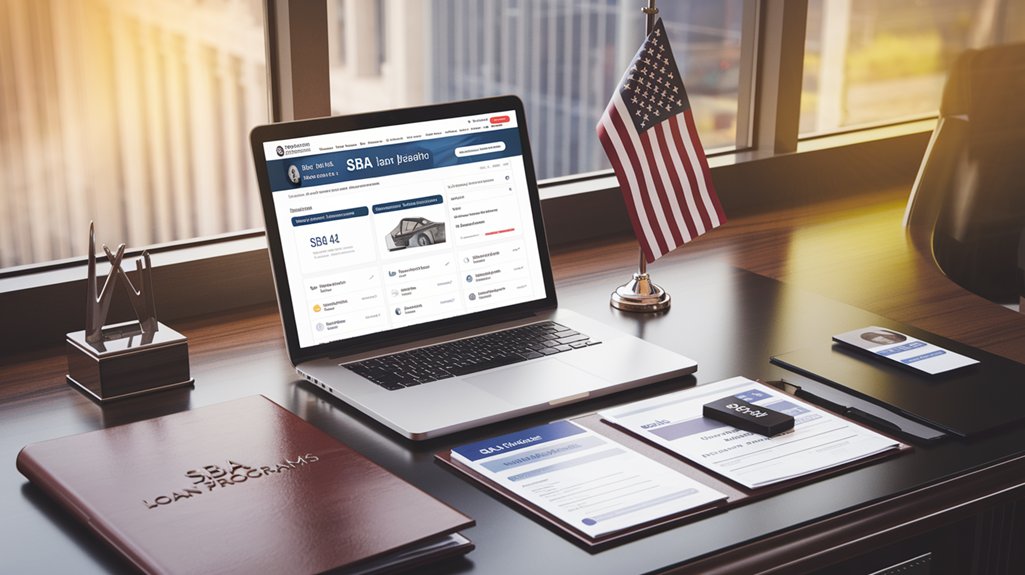
While traversing the landscape of Small Business Administration (SBA) lending, entrepreneurs should familiarize themselves with the diverse loan programs available to meet their specific business needs.
The SBA offers several financing options, each designed for different purposes and with varying sba loan eligibility requirements.
Microloans provide up to $50,000 for working capital and equipment, with loan repayment options spanning 1-6 years.
For major fixed assets, 504 Loans offer long-term financing through a three-party structure.
The popular 7(a) program allows flexible use of funds up to $5 million with terms extending to 25 years for real estate purchases.
Businesses pursuing export opportunities can access specialized programs offering up to $5 million in financing, while disaster-affected companies may qualify for up to $2 million for recovery efforts.
All SBA loans require personal guarantees from owners with at least 20% ownership stake in the business, which helps reduce lender risk.
Registering with the federal contractor database through SAM opens additional doors to government funding opportunities and contracts that can significantly boost business growth.
How to Register in SAM.gov for SBA Loan Opportunities
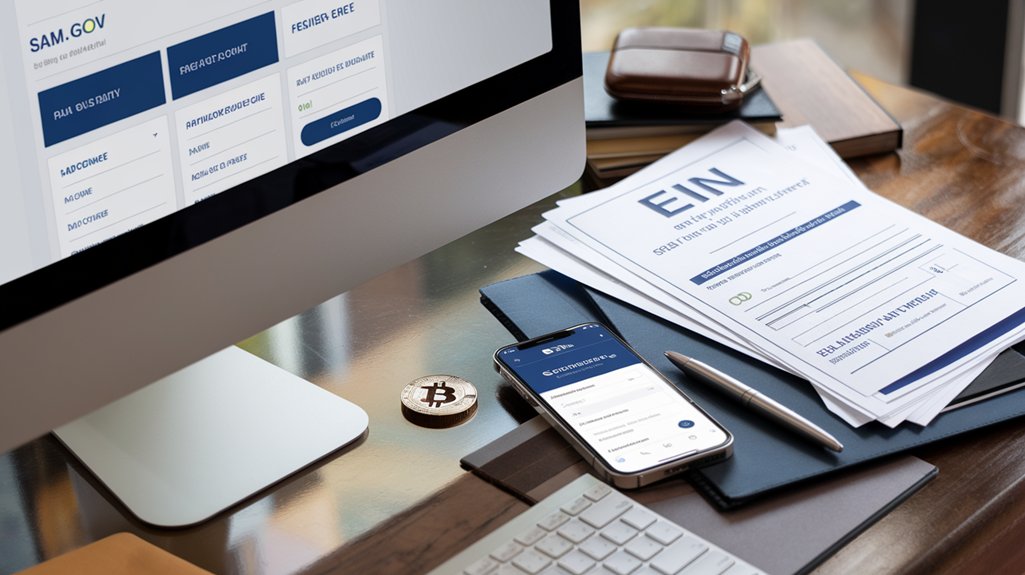
Steering through the SAM.gov registration process marks an essential first step for businesses seeking SBA loan opportunities. The registration, which is free of charge, provides each business with a Unique Entity ID necessary for all federal transactions, including SBA loan applications. The federal procurement system centralizes all contractor interactions with government agencies to streamline the process.
To complete the SAM registration process effectively:
- Gather required documentation including business information, U.S. bank Electronic Funds Transfer details, and your Taxpayer Identification Number before visiting SAM.gov.
- Complete all registration sections accurately, particularly business type identification and executive compensation information. The UEI is a 12-character alphanumeric code that replaces the previously required DUNS number.
- Submit your application and allow 12-15 business days for processing, then verify your status by logging into your account.
Remember to update your registration annually to maintain active status and continued eligibility for federal funding opportunities.
Key Benefits of SAM Registration for Small Business Funding
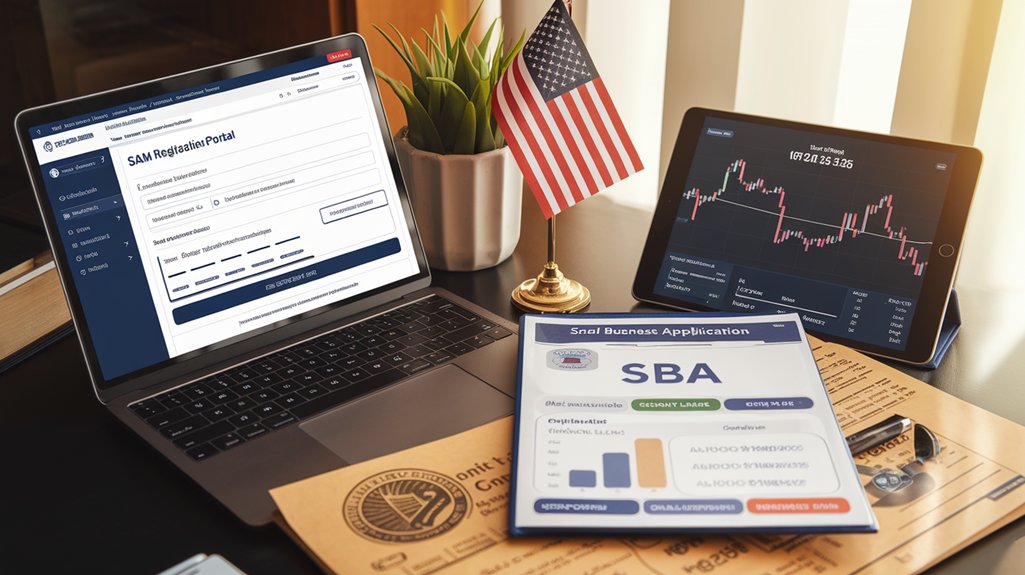
After completing SAM registration, businesses access a powerful set of advantages in their pursuit of SBA loans and federal funding opportunities. The registration establishes eligibility criteria for SBA loan programs, grants, and federal assistance initiatives specifically targeting small businesses.
SAM registration delivers several funding advantages by increasing visibility to federal agencies searching for qualified vendors. Only registered businesses appear in federal procurement databases, creating a competitive edge when pursuing financial opportunities. The system simplifies verification processes, reducing paperwork burdens through its user-friendly interface. The registration process is completely free of charge, allowing businesses to allocate resources to other important areas. Missing SAM registration results in lost opportunities for government contracts and financial support programs.
For minority and women-owned businesses, registration reveals targeted funding initiatives while facilitating connections with larger firms for subcontracting opportunities. The centralized platform tracks contract history and identifies potential financial opportunities, supporting sustainable growth while ensuring compliance with federal regulations through annual renewal requirements. This federal compliance system enhances transparency in the allocation of government grants and funding to qualified businesses.
Frequently Asked Questions
Do Denied SBA Loan Applicants Face Restrictions on Reapplying?
Denied SBA loan applicants face minimal formal restrictions on reapplying. Most lenders require a 90-day waiting period before considering a new application.
Applicants should address specific loan denial reasons, such as insufficient cash flow or low credit scores, before initiating the reapplication process.
Reviewing and correcting documentation errors is essential for improving approval chances. Rather than immediate resubmission, applicants should focus on strengthening their business profile and financial position to enhance their likelihood of approval.
Can Foreign-Owned Small Businesses Qualify for SBA Loan Programs?
Foreign-owned small businesses can qualify for SBA loan programs under specific conditions.
For SBA loan eligibility, at least 51% ownership must be held by U.S. citizens or lawful permanent residents. Businesses with up to 49% foreign ownership can qualify if they meet U.S. ownership requirements.
The current management must have operated the business for at least 12 months or principals must personally guarantee the loan. Additionally, foreign business owners must provide sufficient U.S.-based collateral to secure loan repayment.
How Does Bankruptcy History Affect SBA Loan Eligibility?
Bankruptcy history greatly affects SBA loan eligibility, primarily through its impact on credit scores.
While the SBA doesn’t explicitly prohibit loans to applicants with bankruptcy, most lenders require discharged bankruptcies and several years of financial recovery.
Credit scores, which typically fall below acceptable thresholds after bankruptcy, must improve considerably before approval becomes likely.
Lenders evaluate applications case-by-case, considering the time since discharge, repayment history, and current financial stability when evaluating risk.
Are Nonprofits Eligible for Standard SBA Loan Programs?
Nonprofits are generally not eligible for standard SBA loan programs.
Standard SBA financing is designed primarily for for-profit businesses that generate revenue to repay loans.
However, nonprofits may qualify under special legislation, such as the CARES Act, which provided forgivable loans to nonprofits with fewer than 500 employees.
For regular funding needs, nonprofits should explore alternative loan program options including government grants, community funding, and crowdfunding platforms specifically designed for nonprofit organizations.
What Alternative Funding Exists if SAM Registration Is Denied?
Businesses denied SAM registration can explore numerous alternative funding sources.
Private sector options include traditional bank loans, angel investors like 37 Angels, and venture capital firms.
Community-based financing options include CDFIs, peer-to-peer lending platforms, and crowdfunding campaigns through Kickstarter or Indiegogo.
Additionally, the Accion Opportunity Fund offers loans from $5,000 to $250,000, while industry-specific programs like Amazon’s Black Business Accelerator provide targeted support with fewer requirements.