Representations and Certifications for nonprofit SAM registration verify organizational status and compliance with federal requirements. Common errors include unsigned documents, missed updates, and incomplete forms. Nonprofits should implement compliance management systems, conduct regular training, and maintain thorough documentation. Regular SAM updates are critical for continued eligibility, while proper donor privacy safeguards build trust. Establishing dedicated compliance committees and leveraging outside expertise helps navigate complex federal requirements. The following sections explore essential practices for maintaining compliant registrations.
Essential Representations and Certifications for Nonprofit SAM Registration
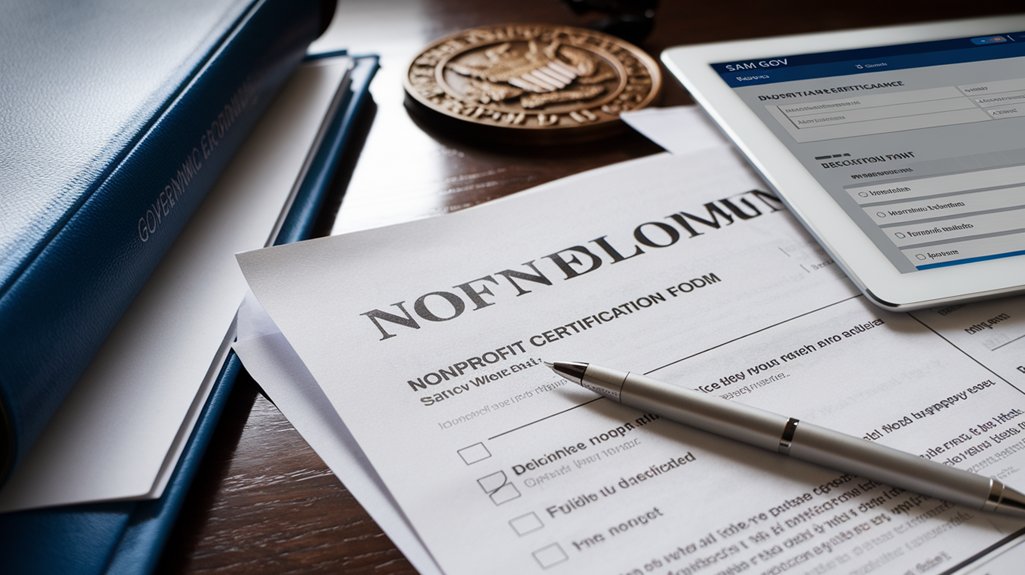
When nonprofit organizations seek federal funding or contracts, representations and certifications (Reps and Certs) form a critical component of their System for Award Management (SAM) registration.
These official statements verify the organization’s status and demonstrate nonprofit compliance with federal laws and regulations.
Federal compliance verification is essential through accurate representations that legitimize a nonprofit’s operational status and legal standing.
Key Reps and Certs for nonprofits include:
- Formal identification as a nonprofit entity
- Statements regarding debarment or suspension status
- Certifications of IRS nonprofit status
- Compliance with anti-lobbying provisions
- Adherence to equal employment opportunity regulations
These certifications directly impact federal eligibility for grants and contracts.
Government agencies use this information to evaluate qualification for awards, while potential partners assess organizational credibility. A comprehensive SAM profile maintenance strategy helps organizations remain competitive in securing federal funding opportunities. Providing false or misleading information in this section can result in serious penalties, including fines and criminal charges. These documents must be regularly updated in accordance with SAM renewal dates to maintain compliance.
Nonprofit organizations must guarantee all representations remain current and accurate to maintain eligibility for federal opportunities.
Common Errors in Nonprofit Reps & Certs Documentation

Despite careful attention, nonprofit organizations frequently encounter documentation errors during the SAM registration process, leading to delays and potential disqualification from federal funding opportunities.
Documentation accuracy suffers when organizations submit unsigned certifications or incomplete forms with missing information.
Nonprofits commonly neglect certification updates, failing to regularly review and renew their representations. This oversight can cause compliance issues and registration lapses. Starting the renewal process 2-3 months early can help organizations avoid these potentially costly lapses in eligibility. Federal grant eligibility depends heavily on maintaining proper SAM registration and documentation.
Other prevalent mistakes include:
- Incorrectly using Terms and Conditions, demonstrating a misunderstanding of contractual obligations
- Submitting inconsistent certification statuses across different applications
- Missing required signatures on critical documents
- Providing inaccurate financial reporting data that affects eligibility determinations
Organizations that implement systematic document management protocols and verification procedures appreciably reduce these errors, ensuring smoother registration processes.
Best Practices for Managing Reps & Certs Compliance
Implementing robust compliance management systems represents the cornerstone of successful representations and certifications administration for nonprofit organizations. These systems should include regular compliance training for all staff involved in the SAM registration process, guaranteeing they understand regulatory requirements and organizational policies.
Nonprofits should conduct periodic risk assessments to identify potential compliance vulnerabilities, particularly in areas of financial management, governance oversight, and operational requirements.
Establishing dedicated committees focused on compliance and audit functions can strengthen oversight without interfering with management responsibilities.
Documentation procedures should include thorough record-keeping practices, automated compliance tracking software, and regular internal reviews.
Organizations benefit from engaging outside counsel with regulatory expertise to navigate complex requirements, particularly when operating across multiple jurisdictions.
Regular SAM registration updates are crucial for maintaining eligibility for federal funding opportunities and grants.
Implementing whistleblower protections further guarantees compliance issues can be identified and addressed promptly. Implementing comprehensive donor privacy safeguards is essential as regulatory scrutiny on donor information protection has significantly increased in recent years. Adopting ethical standards enhances effectiveness for nonprofits while building trust with donors and the communities they serve.
Frequently Asked Questions
Can International Nonprofits Register in SAM?
International nonprofits can register in SAM if they meet specific eligibility requirements. They must provide a verifiable legal business name and physical address that match official records.
The SAM registration process for international organizations requires:
- NCAGE code from the Defense Logistics Agency
- Employer Identification Number (EIN) or Tax Identification Number (TIN)
- Consistent information across all databases
- Notarized authorization letter
- Physical street address (no P.O. boxes)
- Compliance with applicable U.S. federal regulations
How Long Does Processing Take After Submitting Representations and Certifications?
The processing timeline for SAM representations and certifications typically takes up to 10 business days for initial activation.
Entity validation reviews may require additional time depending on documentation availability.
Certification updates become effective immediately upon submission, but the full registration process should be started well in advance of deadlines.
Organizations should monitor their status regularly and plan for annual renewals to avoid lapses that could jeopardize contract eligibility.
Are SAM Registrations Transferable Between Related Nonprofit Organizations?
SAM registrations are not transferable between related nonprofit organizations. Each nonprofit entity must maintain its own unique registration, even if organizations share missions or leadership.
The registration connects to specific organizational details like bank accounts and tax information. When nonprofits merge or restructure, the surviving entity must update its existing SAM registration or create a new one.
SAM.gov provides guidance for internal transfers but does not support registration transfers between separate legal entities.
What Happens if Representations and Certifications Information Changes Mid-Year?
When an organization’s status changes mid-year, they must immediately update their representations and certifications in SAM.
These mid-year updates are essential for maintaining certification accuracy and compliance with federal requirements. Organizations must log into their SAM account, navigate to the representations and certifications section, and submit the necessary changes.
Failure to update this information promptly can result in compliance issues, potential loss of federal contracts, and inaccurate representation in government systems.
Can Consultants Complete Representations and Certifications on a Nonprofit’s Behalf?
Nonprofit consultants can complete representations and certifications on behalf of organizations, but with important limitations.
The nonprofit must provide formal authorization, typically through a letter of authorization or legal proxy. Consultants must guarantee all information submitted is accurate and verified by organizational leadership.
While consultants can manage the technical aspects of SAM compliance, the nonprofit remains legally responsible for all representations made.
Regular communication between consultants and nonprofit leadership is essential for maintaining compliance.