Incorrect email information in SAM.gov registrations frequently causes verification failures, missed communications, and potential disqualification from federal opportunities. Most errors stem from using personal email domains instead of official business addresses, outdated contact information after personnel changes, or mismatched data across registration fields. Organizations face serious consequences including missed contract opportunities, payment delays, and potential compliance audits. Implementing proper email validation procedures and regular contact information reviews can prevent these costly registration complications.
Common Email-Related Registration Failures in SAM.gov

Maneuvering the SAM.gov registration process requires careful attention to email contact information. Registration accuracy hinges on providing official government or business domain emails rather than personal accounts, which often trigger verification issues. Step-by-step guidance is available to ensure proper email validation during the initial setup.
Many entities fail when using shared, inactive, or outdated email addresses, resulting in missed critical notifications and renewal deadlines. This can lead to inactive status and potential ineligibility for new government contracts.
Email verification problems commonly occur when contact information doesn’t match supporting documentation or financial records required for ACH validation. Additionally, organizations frequently neglect to update email contacts when personnel changes occur, creating information gaps. All mandatory POCs must be provided with valid email addresses before a registration can be successfully submitted.
SAM.gov users must also remain vigilant against phishing attempts containing urgent language about registration expiration. These scams can compromise sensitive credentials and lead to unauthorized account modifications, further complicating the registration process.
Real Consequences of Mismanaged Contact Information
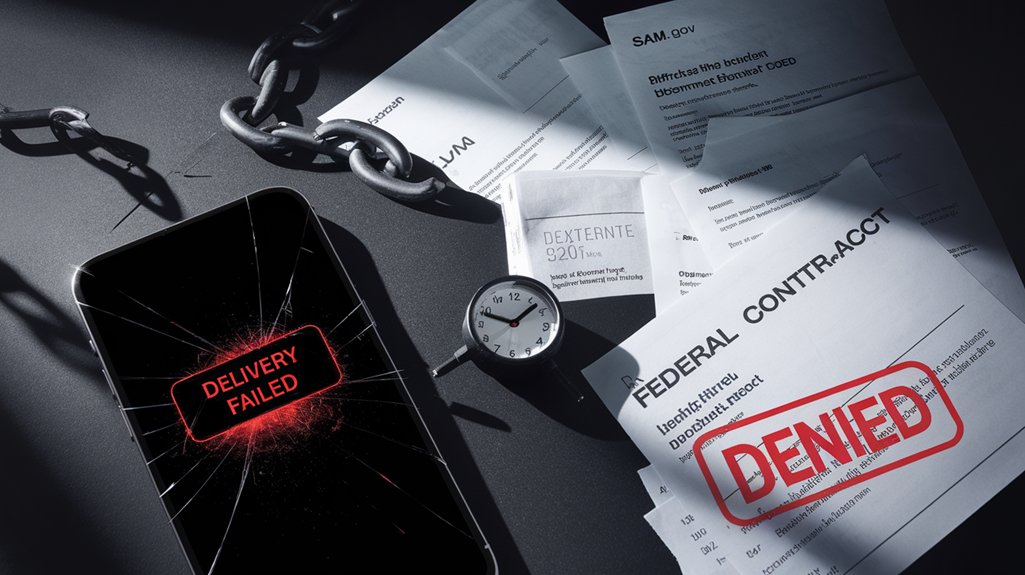
Numerous organizations face severe repercussions when email contact information is improperly managed in SAM.gov registrations.
When email verification fails due to incorrect addresses, companies risk missing critical communications about contract opportunities, updates, and compliance requirements.
System for Award Management registration is essential for any entity seeking federal funding opportunities. Financial impacts can be substantial, with fines ranging from thousands to millions of dollars for non-compliance. Organizations may experience contract termination, loss of federal benefits, and increased audit costs when contact information errors impede proper communication.
Procurement processes suffer significant disruptions, resulting in missed opportunities and operational delays. Compliance audits triggered by information discrepancies can lead to suspension or debarment from federal contracting. Companies providing false information may face criminal penalties including significant fines and possible imprisonment.
These consequences extend beyond immediate financial penalties, affecting organizational reputation, data integrity, and long-term business relationships with federal agencies—making accurate contact information management a critical business priority. Annual renewal of SAM.gov registration is mandatory to maintain eligibility for federal funding opportunities.
Essential Strategies to Ensure Email Accuracy

Maintaining accurate email contact information in SAM.gov registrations requires systematic approaches that organizations can implement immediately.
Robust email formatting validation techniques, including real-time verification during data entry, can prevent common errors before submission occurs. Organizations should incorporate domain verification processes that check DNS MX records to confirm email domains are legitimate and active. Required documentation uploads must be carefully reviewed to ensure all mandatory attachments are included with the registration.
Proactive email validation using real-time verification and DNS checks ensures legitimate domains before submission, preventing costly registration errors.
A multi-layered approach works best: implement confirmation fields requiring users to re-enter addresses, send immediate verification emails with clickable confirmation links, and utilize automated spell-check tools that flag common domain misspellings like “gmial.com.”
User education remains critical—providing clear examples of correct formats and explicit warnings about the consequences of incorrect email information can greatly reduce error rates during registration. Regularly checking both inbox and spam folder for confirmation emails is essential to prevent missing important SAM registration communications.
Frequently Asked Questions
How Long Does Correcting an Email Error in SAM Take?
The email correction timeline in the SAM registration process typically takes between 1-3 business days for standard updates.
However, if the change triggers external validations, processing may extend to 7-10 business days.
Organizations should submit corrections through the Points of Contact update section rather than initiating a full renewal.
Regular monitoring of notification emails is essential, as correction speed depends on system workload, submission accuracy, and whether additional verification is required.
Can I Use My Personal Email for SAM Registration?
Yes, individuals can use personal email addresses for SAM registration.
Personal email advantages include better account control and direct communication access. However, using a business email may provide greater professionalism and continuity.
Registration process tips:
- Select an email address you check regularly
- Avoid distribution lists or group emails
- Consider using an email previously associated with SAM.gov to maintain historical connections
- Guarantee the address remains accessible long-term for important notifications
What Happens if My Entity Email Domain Changes Post-Registration?
When an entity’s email domain changes post-registration, the registration impact can be significant. The entity must update their email information in the “Manage Entity” section of SAM.gov.
Failure to update this information may result in:
- Lost access to system notifications
- Communication disruptions with federal agencies
- Potential missed contract opportunities
Users should promptly update all POC email addresses to maintain continuous access to their SAM registration and guarantee uninterrupted business operations.
Who Should I Contact First When Experiencing Email Validation Issues?
When experiencing email validation issues, users should contact the Federal Service Desk (FSD) first.
The FSD provides specialized email support for all validation process problems through:
- Phone: 866-606-8220 (Monday-Friday, 8am-8pm EST)
- Website: FSD.gov (live chat and support tickets)
FSD is the official technical support channel designated by GSA for SAM.gov account issues.
Users should avoid third-party services and maintain their ticket number for follow-up communications.
Are There Penalties for Repeatedly Updating Contact Information?
While frequent updates aren’t specifically penalized, there are penalty implications for providing false information.
Repeated changes may trigger government audits or reviews to verify accuracy. High contact frequency updates could raise suspicion of deceptive practices, potentially leading to:
- System access termination
- Contract suspension
- Monetary fines
- Criminal charges in severe cases
Entities should guarantee all updates are truthful and justified to avoid compliance issues.