
Three key factors typically delay SAM.gov approvals: data discrepancies between government systems, insufficient documentation, and delayed responses to administrative inquiries. Minor inconsistencies in business names or addresses trigger manual reviews, while missing certified documents or translations halt the process entirely. Incorrect contact information compounds these issues, extending registration timelines by weeks. Regular profile maintenance, thorough accuracy checks, and proper documentation submission greatly reduce these validation obstacles.
Data Discrepancies Between Government Systems
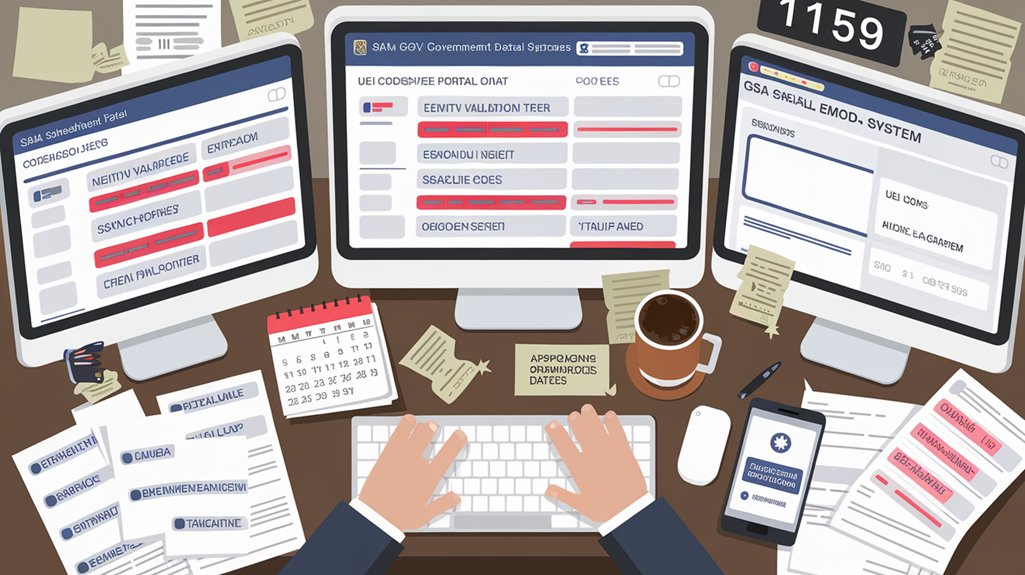
Since the shift of entity validation services from Dun & Bradstreet to SAM, contractors have faced increasing approval delays due to data inconsistencies across government systems.
The lack of synchronization between SAM.gov, eMod, and GSA Schedule databases creates significant validation challenges, requiring duplicate data entry that often results in conflicting information. Regular profile maintenance updates are essential to minimize data discrepancies and ensure compliance with federal standards.
Minor differences in business names and addresses, such as punctuation variations or formatting discrepancies, trigger system mismatches that necessitate manual review. The transition to system-generated UEI codes has compounded these validation issues despite being intended to simplify the process.
Even trivial punctuation or formatting differences between systems can force time-consuming manual validation processes.
For example, a comma in a company name in SAM.gov but absent in the GSA database can halt the entire validation process. These issues undermine data integrity across federal platforms.
Recent implementation of automated fixes like robomod technology aims to reconcile these minor differences, but the systems remain imperfectly integrated, causing persistent delays in contractor approvals. Many contractors also face significant payment delays when registration issues prevent proper processing of invoices for completed government work.
Insufficient Documentation and Validation Materials

Beyond the challenges of system inconsistencies, contractors face considerable approval delays due to documentation issues. SAM.gov requires precise documentation that matches the entity’s registration information exactly, yet many applicants provide insufficient validation materials.
Common documentation problems include:
- Submitting screenshots or internal documents instead of certified copies from authorized sources
- Missing notarized letters that authorize individuals to register entities
- Using unacceptable documents like leases, passports, or unredacted financial statements
- Failing to include certified English translations for foreign language documents
When documents lack official seals or proper certification, they trigger additional verification steps, extending approval timelines considerably.
Maintaining accurate UEI and CAGE codes is crucial for successful registration and ongoing federal compliance. Entities involved in government contracting face particularly rigorous scrutiny, making proper documentation essential for timely registration completion. The inconsistency between the legal name provided and what appears in IRS records is one of the most common reasons for registration validation failure.
Delayed Responses to Administrative Inquiries
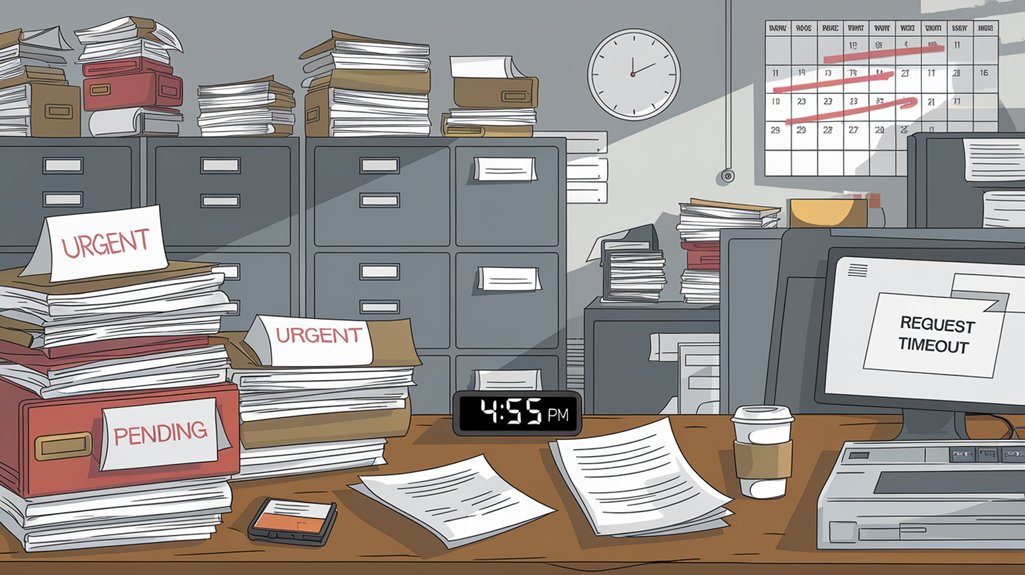
The delayed response to administrative inquiries represents a significant bottleneck in the SAM approval process, often extending registration timelines by weeks or even months.
These delays frequently stem from communication breakdowns when points of contact fail to receive or respond to validation requests in a timely manner.
A critical factor contributing to these delays is outdated contact information in the system. When the Government Business POC information is incorrect, important notifications go undelivered.
Additionally, the five-day ticket closure policy compounds the problem—if an entity doesn’t respond within this window, their case is closed and must be reopened, further extending the timeline.
Organizations experiencing lower priority processing, particularly those with lapsed registrations, face even longer wait times compared to entities submitting renewal applications. As demonstrated in the TLS Joint Venture case, allowing SAM registration to lapse can result in bid protest sustaining and possible contract loss even after an award decision.
The transition from DUNS to UEI has created additional validation delays that further complicate timely processing of administrative inquiries.
Systematic data discrepancies between submitted information and verification requirements often trigger extended review periods, making thorough accuracy checks essential before submission.
Frequently Asked Questions
How Long Does a Typical SAM Registration Take to Complete?
A typical SAM registration timeline spans 2 to 8 weeks for completion, though the official estimate is 7-10 business days.
The approval process duration varies based on business complexity, information accuracy, and registration volume. Most organizations experience actual processing times of 2-6 weeks.
For renewals, businesses should initiate the process 45-60 days before expiration.
Preparation, document readiness, and information accuracy greatly influence how quickly the registration can be completed.
Are Foreign-Owned Businesses Subject to Additional Validation Requirements?
Yes, foreign-owned businesses face enhanced scrutiny in the SAM validation process.
They must provide translated documentation, including bank statements and certificates of incorporation, to verify their physical address and legal status.
The NCAGE code registration must exactly match SAM information, and all business names must be consistent across DUNS and other registrations.
These requirements extend the typical registration timeline and necessitate careful preparation of supporting documents to avoid delays.
Can Registration Delays Affect My Ability to Bid on Contracts?
Yes, registration delays can greatly affect a contractor’s ability to bid on contracts.
The registration impact extends throughout the procurement lifecycle, potentially causing missed opportunities if SAM registration lapses or experiences delays. Contractors must maintain active SAM status during the entire solicitation period to remain eligible for awards.
The bidding timeline can be disrupted when renewal processes encounter delays, as inactive SAM status renders contractors ineligible to bid on or receive federal contract awards.
What Happens if My SAM Registration Expires During a Contract?
When a SAM registration expires during an active contract, the contractor faces serious consequences.
The government may suspend payments immediately, potentially disrupting contract continuation. The contractor becomes technically ineligible to perform federal work, risking contract termination and penalties.
Agencies cannot legally continue working with contractors having expired registrations.
Prompt registration renewal is critical to restore eligibility, resume payments, and maintain compliance with federal requirements.
How Do Sanctions or Debarment Issues Impact the Approval Process?
Sanctions or debarment issues substantially extend SAM approval timelines.
Sanction implications include detailed OFAC verifications and compliance checks against multiple government exclusion lists.
Debarment procedures trigger enhanced scrutiny, requiring extensive documentation and potentially legal interventions to resolve.
Entities with name similarities to sanctioned organizations face additional verification steps.
Contractors with international operations or partnerships undergo more complex reviews, increasing processing times by weeks or even months.