SAM renewal typically takes several weeks to complete, with experts recommending initiation 30-60 days before expiration. The process duration varies based on registration complexity, documentation accuracy, and government processing workloads. Strategic preparation should begin 90 days before expiration, including thorough information review, UEID verification, and document compilation. Professional assistance often accelerates approvals by identifying potential issues early. Proper planning prevents registration lapses that could jeopardize federal contracting eligibility and funding opportunities.
Navigating the SAM Renewal Timeline: Key Milestones and Deadlines
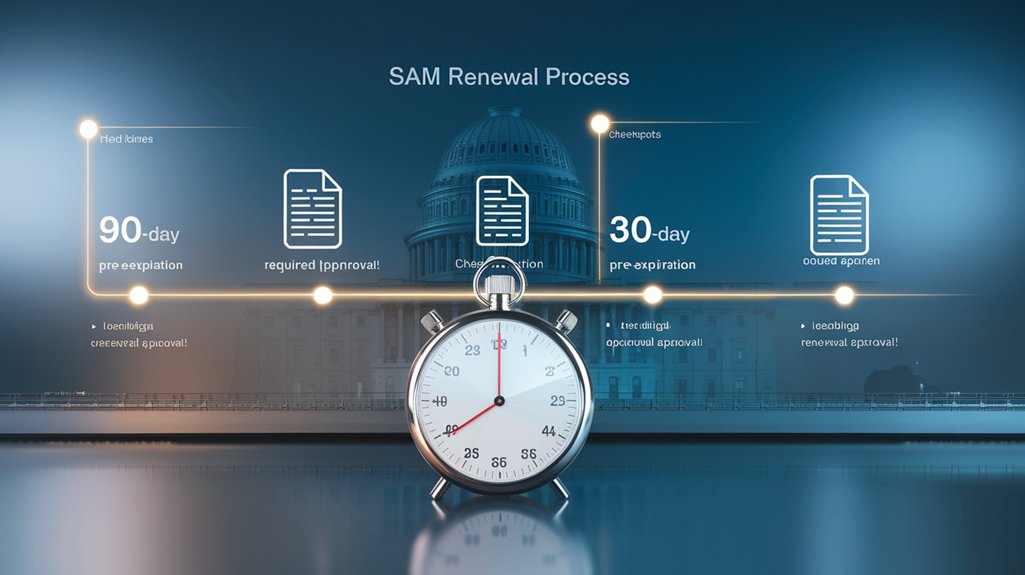
While traversing the System for Award Management (SAM) renewal process, organizations must understand critical timelines to maintain their federal contracting eligibility.
Experts recommend initiating renewal 30-60 days before expiration, as the process typically takes several weeks to complete.
Begin your SAM renewal 30-60 days before expiration to avoid disruptions in federal contracting eligibility.
A thorough renewal checklist begins with pre-renewal planning at 90, 60, and 30 days before expiration. Organizations should:
- Review all business information for application accuracy
- Verify Unique Entity ID (UEID) details
- Address any validation issues immediately
- Prepare required documentation in advance
Starting early prevents potential delays that could jeopardize federal funding opportunities. Maintaining active registration status is essential as businesses with imminent expiration may be overlooked for contracts.
The renewal process is generally more efficient than initial registration, but organizations must still account for possible complications, especially when requirements change from year to year. Government grants and contracts require continuous compliance with SAM regulations to maintain eligibility. Once submitted, the renewal application typically undergoes a two-week processing period before approval is confirmed.
Factors That Impact Your SAM Renewal Processing Duration

Organizations pursuing SAM renewal face varying approval timelines based on multiple factors that can either accelerate or delay the process.
The complexity of registration requirements greatly influences processing time, with more complex registrations typically taking longer to complete. Timely eligibility status is crucial for maintaining uninterrupted access to federal opportunities.
Effective preparation strategies can considerably reduce delays. Thorough documentation collection and careful form completion minimize error rates, preventing time-consuming resubmissions. The validation process during renewal verifies your information against external databases, which can extend processing time depending on data accuracy.
Professional assistance, while adding cost, often results in faster approvals through expert error management.
External factors also affect timelines. SAM.gov system performance issues, government workload peaks during fiscal year-end periods, and regulatory changes can extend processing times unexpectedly. According to recent alerts, high demand is currently causing extended validation ticket processing times beyond the advertised ten business days.
Manual verification requirements for certain business types further impact duration.
Starting the renewal process 60-90 days before expiration provides buffer time for addressing potential complications and maintains continuous registration status.
Strategic Preparation: Optimizing Your Renewal for Faster Approval

Strategic preparation represents the cornerstone of successful SAM renewal processes, greatly reducing approval times and preventing registration lapses. Organizations should begin renewal activities at least 90 days before expiration, establishing multiple reminder systems beyond SAM’s automated alerts.
Documentation accuracy stands as the primary factor in expediting approvals. Having a complete DUNS number verification is essential for the renewal process. Contractors should maintain thorough digital files of all required documents, including CAGE numbers, UEI, and TIN information, systematically verifying each element before submission. This verification step ensures businesses maintain proper compliance with federal requirements during the renewal process.
Many organizations benefit from expert consultation, particularly those with complex registrations. Professional guidance helps navigate compliance requirements efficiently, often identifying potential issues before submission.
These specialists can troubleshoot unusual problems that might otherwise delay approval, making their services a worthwhile investment for contractors seeking reliable federal registration maintenance.
Frequently Asked Questions
Can I Expedite My SAM Renewal in Emergency Situations?
Yes, emergency protocols exist for expediting SAM renewals. Organizations facing urgent deadlines can request expedited services through specialized providers like Federal Contracting Center.
The GSA has implemented a streamlined process allowing registrations to be activated before notarized letters are fully processed. This expedited option helps maintain payment schedules and bidding eligibility.
Entities should submit an expedited review request through appropriate channels to minimize delays and guarantee operational continuity during critical periods.
What Happens if I Miss My Renewal Deadline Completely?
Missing a SAM registration renewal deadline results in immediate ineligibility to bid on new federal contracts.
The business becomes invisible in SAM searches, causing potential payment delays for existing contracts.
Missed deadlines often lead to significant revenue losses and possible contract terminations.
The contractor’s reputation with federal agencies suffers, creating long-term competitive disadvantages.
To restore eligibility, businesses must complete the full registration process again, which may include additional administrative costs.
Are Renewal Timelines Different for International Registrants?
International registrant requirements technically follow the same 365-day renewal timeline as domestic registrants.
However, processing time variations often occur for international entities due to additional verification procedures and cross-border data checks.
International registrants should initiate renewals earlier than the standard 60-day recommendation, as they may experience longer wait times related to documentation verification, language differences, and time zone challenges.
The compliance obligations remain identical, but the practical processing timeline typically extends longer.
Can I Update NAICS Codes During Renewal Without Delaying Approval?
Yes, organizations can update NAICS codes during SAM renewal without typically causing delays in approval. The system allows for these modifications as part of the standard renewal process.
However, companies should guarantee all code selections accurately reflect their current business activities. Careful validation of NAICS code updates before final submission helps prevent renewal application impacts that might trigger additional review.
For best results, companies should prepare their updated codes in advance of beginning the renewal process.
How Do Entity Reclassifications Affect SAM Renewal Processing Times?
Entity reclassifications can considerably impact SAM renewal processing times.
Changes in entity classifications typically require additional verification steps, which may cause processing delays of several weeks beyond the standard 1-2 month timeline.
Businesses should initiate renewals at least 60 days before expiration when making classification changes.
To minimize delays, organizations should prepare all documentation in advance, verify information accuracy, and consider consulting with SAM experts when maneuvering through complex reclassification scenarios.